Monday, June 13, 2011

Pandora is Losing Money, Facebook is Losing Users, Uh-oh?


Groupon got it's spanking in last week's blog, is it Pandora's turn? Let me start by saying Groupon is looking to go public at a $25 billion valuation whereas Pandora will be just north of $2 billion, and they're obviously two very different businesses. Pandora which should go public this Wednesday, raised its IPO price per share to $11 last week. With a whopping 90 million users and constant flow of advertisements every 5 songs or so, Pandora should be doing alright, right? Not really because the cost Pandora is paying to music label companies to stream their music severely outweighs the ad revenue. Moreover, as the smartphone market continues gaining traction, the ad revenue will decrease for Pandora. The PC market is more desirable from an ad standpoint.

Pandora had sales of $51 million for the quarter ending April 30th but they were not profitable and suffered their worst loss at $6.8 million. Pandora predicts they will continue going southward on the money train until 2012, at the earliest. So investor beware and don't get caught in the Tech IPO hooplah. Unlike Groupon, Pandora isn't seeing losses in the $400 million range and they're not as reliant on marketing. But remember, technology is developing at a rapid pace, and we saw Google institute a music type program last week. Another scary competitor who just signed a deal with Universal Studios is London based Spotify. Spotify announced today they are looking to launch in the US very soon and this will be big. Spotify lets you stream music on an I-tunes type program from a variety of music label companies for free. You can then share songs or lists with your friends. I-tunes meets Pandora? They have 1 million paid subscribers across Europe as of March and they're only growing. Pandora is awesome, I use it, you use it, my cat uses it, etc. It's pretty awesome to be letting the radio station pick the song for me rather than me brainstorming what my favorite songs/bands are. But the costs for Pandora to run such a unique company are extremely high and only getting higher. This isn't some Kazaa or Napster type program because the music label companies are getting a piece of the pie.
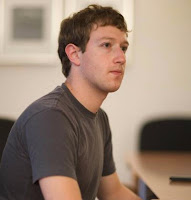

The other semi-big news in tech land was the fact that Facebook is losing users, at least some of them. Facebook which has nearly 700 million users worldwide saw a decline in the number of users in the US. There were 155.2 million users in the beginning of May compared to 149.4 million near the end of May. What gives? Let's remember that it's summertime for most kids so no more multitasking for college students on Facebook, a history paper, chemistry test, and your email at the same time. People might be finally socializing outside the way it's supposed to be done and several have internships or jobs now where Facebook's use is prohibited.

Is this is a pause for concern? No, not at all. These dips have happened before with Facebook and even MySpace, and will continue to happen again. This isn't a significant portion of users first of all and a similar looking decline in users happened in 2010 and 2009 with Facebook and then a surge northward followed that. Maybe people are concerned about all the privacy and hacker news happening with Sony, I'm not sure. But one thing to consider is that more people are spending internet time on their phones and the smartphone business is increasing, and Facebook Mobile is terrible to say the least. So, just because people are buying more smartphones doesn't mean more of them will be signing up for Facebook because its design for mobile needs an improvement. That's why you're seeing companies like Color, which lets users post photos and then find people that are hanging out somewhere near them, get VC funded for $40 million pre-launch. VC investors know social is weak for cell phones, maybe Color can be the mobile network. Nice movie title there.

This decline in users will be scary if another couple dips follow (like what happened to MySpace), which is unlikely to happen. WSJ reporters mentioned today that China is a big market that Zuckerburg has yet to take hold of. Chinese are paranoid about displaying their private info on a social network platform so it will take some time for any agreement to get reached. Zuckerburg made a trip out to China last month with no apparent success aside from some "agreement." China hones 1/3 the world's population and would add a significant portion of users. Maybe, just maybe Facebook has reached its peak. There are many new social media start-ups getting funded as they focus on a social network for young kids. EverSocial is one company that got a backing last week and look for more to arise. As 6 million users "unfriend" Facebook (as per the WSJ), investment banks will be "adding" Facebook as a friend as the company is expected to go public in early 2012 per CNBC. Facebook announced a couple months ago it expects to reach that 500 investor threshold by the end of 2011 and at that point (according to SEC regulations) they'll need to file to go public. At a valuation of $100 billion not $85 as we've often heard. That will be outrageous but we'll see what the company does this summer in terms of users and international exposure. That could decide whether they're the real deal or pretenders.


LET'S GO BRUINS!!


Thursday, June 9, 2011

Thanks to Facebook, Fusion-io IPOs With a Bang, Kinda


"Whether you broke or rich you getta get biz
Having' money's the everything that having' it is."
-Kanye West


In another case of investment banking underwriting or investor demand, Fusion-io went public today on the NYSE under the ticker FIO, with pricing initially at $19/share (above the targeted $13-15) and it opened trading at $25, reaching $27 at some point today as well. What is Fusion-io? The Utah based company uses flash memory for data hardware and software, which supposedly improves data center efficiency. Stocks surged nearly 32% from its original IPOed price and according to the Wall Street Journal, their revenue has increased to 125.5 million the past nine months and gross profit has quadrupled to $65.7 million. Fusion-io has 1,500 customers and is selling 10.8 million shares in the public offering. They will use the offering money to expand its sales force, diversify its clients, and possibly even make some acquisitions.

Facebook, which helps social gaming companies like Zynga and Digital Chocolate generate large revenues, also accounts for 47% of Fusion-io's revenue. Apple accounts for roughly 30% of the revenue. Fusion-io has roughly 8 other clients to whom they provide this data storing software. Because of the reliance on so few customers it may be hard for Fusion-io to generate profits. "Fusion-io also has a short operating history and has never been profitable. It was founded in late 2005 and began selling its first products in April 2007," adds the WSJ. Any fluctuation in Facebook's financial doings will affect Fusion-io in a big way.

The man pictured at the top of this post is Steve Wozniak, co-founder of Apple. He joined Fusion-io's board as an investor and chief scientist in 2008. There has been a pattern in this tech cycle of big companies hiring important role models and supporting cast members to help them go public or get acquired. I'm referring to Starbucks CEO Howard Schultz being on the board at Groupon, he would be a terrific mentor for young CEO Andrew Mason. EA founder Bing Gordon is an early investor in Zynga and has been integral part of CEO Marc Pincus's growth in recent years. Sheryl Sandberg left Google and became COO of Facebook, another savvy veteran who will only help prepare Facebook before their supposed IPO in April of 2012. Former White House Press Secretary Robert Gibbs, has been rumored to join Facebook to help them battle against privacy issues. Gibbs left his duties in Washington in February of this year.

Fusion-io isn't as sexy as LinkedIn, and most likely it won't be as much of a long-run catalyst as LinkedIn. The fact that Fusion-io is connected in a significant with some big tech companies, namely Facebook, has lead to the price offering increase. Investors are confident that any connection to Facebook and Apple can only be a good thing. What was originally valued at $1.4 billion is now worth close to $2billion. Marc Andressen made an interesting point on "The Big Interview" on WSJ TV: if you add up all the valuations (based on Secondmarket) of all the hot private tech companies, they will still be valued less than Google. That's one company who's P/E of 10, he considers very low and says Google (and Apple too) are undervalued on Wall Street. Google's P/E is actually 20, which pretty high considering financials are trading at a P/E of 12-15 (Citi, Morgan Stanley, etc.) Since 2000, Wall Street hasn't been sold on tech stocks. LinkedIn and Fusion-io's success can be seen as an investor's desire to get a piece of growth companies, particularly ones in the hyped up tech sector.


Wednesday, June 8, 2011

"Wildly Profitable" = Wildly....Wild?....Lefkofsky's stumble and Maples Likes Groupon


"And that's about the time she walked away from me
Nobody likes you when you're 23."
- Blink 182


Groupon CEO Andrew Mason isn't necessarily 23, he's 30. Groupon's other Co-founder, Eric Lefkofsky (above) is 41. But the last few weeks have seen both men do some weird and immature things. From Mason's death stare at the D9 Conference when asked about a potential IPO, to the SEC filing mentioning we're unusual and we like it that way, to Lefkofsky's (who owns 22% of Groupon, $4bil from IPO) interview on Bloomberg last week where he said Groupon is "wildly profitable." Why's this such big news? Because Groupon may have to file another S-1 form to the SEC because its possible that Groupon knows something the public does not. From last week's S-1 filing it was evident that Groupon has incurred losses in the $400million range, not profits.

From the current SAC Capital investigation to the Galleon Group case, we've seen a fair share of insider trading already this year. This isn't necessarily that, but the Groupon situation does pause for some concern. By rule, you're not allowed to disclose or talk about Groupon's financials to the public pre-IPO, particularly with things that aren't mentioned in the S-1. Two other private companies are close to going public as well: Fusion-io, the developer of flash memory technology, and Pandora, the music subscription site we all know and love. Fusion-io increased its price to $16-18 per share to a valuation of $1.4 billion. Pandora will be in the $7-9 per share range with a slightly lower valuation at around $1.2 billion.


Yes the IPOs are coming, we all knew it would happen eventually. Did LinkedIn's thunderous opening day create a frenzy? Clearly yes, but I don't think it was the catalyst in deciding what companies are going public. There aren't many profitable private companies out there we haven't heard of who are rushing to go public and then will go bankrupt because the public interest will be zero to none. The big sharks will flood the gates within the next year: Zynga, Groupon, Facebook, maybe Gilt and Yelp. Does this mean there's a bubble if we have these significantly different companies going public, most of which are profitable? It's more of a bubble than the past 5 years, yes. But 70% of companies that are IPOing in the past couple years have been profitable, that wasn't the case in the late 90s.

Companies like SecondMarket and SharesPost, where privately companies are traded don't seem to be the reason companies are waiting longer to go public. The reason is it takes a lot of money for an IPO raise from the investors and from the public. $250-300 million at least. Not every private company like Etsy, Yelp, or Spotify can do that, yet. So why's Facebook waiting so long to go public if they're valued around $85 billion on the private market? VC Investor Alan Patricof thinks Zuckerberg doesn't want to be scrutinized if they go public and then have unprofitable quarters. It doesn't make Facebook look strong. It's better to be patient, to grow as a company, and get some good political figures on your side, which is exactly what Facebook is doing.

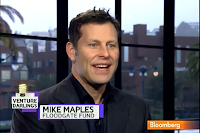
Super Angel investor Mike Maples of Floodgate Fund, said Groupon reminds him of AOL in its early days. Everyone thought AOL was a joke when they started mailing floppy disks to your house and had a cheesy user interface and dial-up connection. Next thing you know, AOL becomes the most widely used form of internet. "Any company who's just 3 years old and goes from 0 to $500mil in revenue is something to pay attention to," he adds. I think Maples is being overly optimistic but given Lefkofsky's recent comments and the comparisons of Groupon to either Amazon or AOL in their nascent stages, maybe just maybe Groupon is the real deal. I think they do have a big advantage with being the first mover in the coupon buying industry. There are other big players such as LivingSocial, Google, and Facebook. But Americans especially tend to be loyal to the biggest industries. Just look at all the bandwagon New York Yankee fans there are.


Thursday, June 2, 2011

The First (Wannabe) Big Fish: Groupon's IPO Filing Should be Worrisome


"I just heard the world, is breaking down into bits again.
Tell me what am I to do?"
- OAR


The sky is falling and the bubble is growing. But wait, Marc Andreessen (acclaimed VC investor) said the reason it's not a bubble is because everyone thinks it is. Huh? Yeah exactly, I wasn't too sold on this theory either but given Andreessen's track history with investing in multi-billion dollar companies (Zynga, Twitter, and Facebook) and the fact that he invented the first browser (Netscape) back in the mid 90s gives him some credibility. The sky is falling because Groupon has just filed for an IPO which will be lead by three investment banks: Morgan Stanley, Goldman Sachs, and Credit Suisse.

Yes, Groupon has ridiculously high and very rapid growing revenues, with $644.7 million in revenues in Q1 of 2011 alone. But they lost $450 million overall and spent $263.3 million on online advertising. So, when will Groupon actually be profitable? That's the million dollar question, or $20 billion dollar question if you consider what they'll be valued when they go public, sometime probably in July. Groupon remember rejected a $6 billion takeover from Google just a couple months ago. So, CEO Andrew Mason clearly feels as though his company can really capitalize on the investor demand as the next hot tech stock, having seen LinkedIn's success.

Unlike the rest of the US economy, Groupon is and has been on a hiring craze. With 7,000 employees already (these are mainly salespeople trying to find merchants) the company looks to expand even more. Just as Reid Hoffman noted in his reasons for LinkedIn going public, Mason mentioned that this IPO will help raise some money for making acquisitions. This money could come in handy given the competition for coupon type deals from LivingSocial, Google, Amazon, and Facebook. To keep up with these four, Groupon might have to keep incurring a loss.


The startling number and one Groupon investors and bankers alike should feel somewhat optimistic about is the gross profit. They were up 24, 600% last year from $10.9 million in 2009 to $280 million in 2010. Now, gross profits do NOT take into account the business expenses and in this case all that money their pouring into online advertising. As much as Wall Street will try to underscore Groupon's revenue stream, they are not profitable and probably won't be for another 2-4 years. How much will Groupon need to spend on hiring employees and furnishing their name online before they make money? I will say the exponential increase in revenue is a positive sign, and something that Pets.com and Webvan.com did NOT have during the dot-com boom.

But I'm a skeptic, and I think Groupon unlike LinkedIn, is more of a trend or a fad, rather than a long-term sustainable business. There has to be a good deal of small businesses who aren't having as grand a time as we the consumers. Especially since these small business are already strained for cash and now we're paying less for their services, I don't see this lasting. Although, the number of subscribers increased to 83.1 million this quarter compared to 3.4 million from a year ago. That is also a positive sign. The fact that Groupon has increased revenues over 1000x the past 2 years and still has no profit, is a bad sign. Not to mention the fact that to compete with LivingSocial, Google, etc. they need to keep pouring money into advertising and hiring. How patient are investors going to be with this company before they start selling or better yet, running? Marketing advertisements are something Groupon can't live without, but shareholder value is something the company needs to keep its investors satisfied.

Groupon then has a strong correlation with Amazon, a company that became profitable 7 long years after its 1997 IPO. Are investors going to sit around waiting for Groupon to go through the same growing pains? I think not. And Groupon will clearly not be like Netscape in 1995 when it IPOed and had immediate success. Mason's unorthodox leadership could be a make or break for this highly anticipated private company. Having Starbucks CEO Howard Schultz as a board member could pay big dividends (not just to investors down the road) but to the company. Schultz turned Starbucks into an incredibly successful company and he knows a thing or two about deal/purchasing goods. "We are unusual, and we like it that way," wrote Mason in the SEC filing released this afternoon. That sounds like a tagline for some Wes Anderson movie or nudist rally, not a company who's trying to prove it's a worthy investment.


Wednesday, June 1, 2011

Charlie Cheever is Setting the Bar for the Next Generation of Entrepreneurs


For years computer science students have been ridiculed for being stinky, nerdy, socially deficient, and not-particularly handsome. I give you, Charlie Cheever (above). No, not because he fits into those categories, in fact he doesn't. But because Charlie is the type of guy WE should strive to be, if not us, then our kids. In 2003, this Dexter Morgan meets Cary Elwes (in his youth) look-a-like graduated from Harvard with a computer science degree. Sound familiar? Oh yeah, that Zuckerburg guy founded Facebook or thefacebook.com until Shaun Parker changed it and then the social media boom took off. Cheever actually worked at Facebook from 2006 to 2009 where he had such great success that he became head of the Facebook Platform and Facebook Connect. But, his entrepreneurial desires swayed him to leave Facebook and start his own company, Quora with former Facebook CTO, Adam D'Angelo.

I'm sure all of you have used Answers.com at some point or previous to that Ask.com. Answers.com was good at the beginning of its launch but soon the answers to questions being cluttered with nonsense answers and the site was losing traction. Quora is the where Yahoo! answers.comm meets Wikipedia. It has no advertisements and it acts as a question and answer platform for a wide array of topics. For instance "Is it possible to become Batman in real life?" or "What are the best social gaming start-ups in SF?" Unlike answers.com, you can see the profiles of the people who answered or posted questions/topics and see who they are (Venture capitalist, entrepreneur, or rock climber). The fact that users can edit answers that they see as "spam" differentiates it from answers.com in a big way. That and the fact that Quora has different high-profile individuals posting on the site, that has gained them immense credibility.

Back to Charlie Cheever. He is the NOW, he is someone we should strive to be. Having graduated from nearby Shady Side Academy (in Pittsburgh) and then taken the Harvard CS route and actually was a teaching assistant for one of Zuckerburg and Moskowitz's classes, Cheever is now starting his own legacy as an entrepreneur, and not just one of Zuckerburg's underlings at Facebook. Innovation is booming, venture capital money is being splashed with greater ease then the IMF with Greece's bailout last year. Real companies, with large user bases and profits are going public and making the case, that this tech boom is different and better than the last one that happened in the 90s.

If you saw Charlie Cheever walking down the street you might think he's a serial killer or you might think he's working at some top notch law firm in New York City. A computer scientist, someone who likes spending hours upon hours coding is NOT the story you were expecting to hear. Yet, this social media surge and technology boom has made these so-called "nerdy" people (who are the founders of Twitter, Facebook, or Groupon) hot commodities. We are so entrenched with technology in our daily lives and we are growing so accustomed to using these different social media networks that the people behind their creation are suddenly cool.

The abundance of resources the internet has given us with topics ranging from Greek Debt Crisis to the Hollywood Diet, has made us better all around people. We now know what to do if we want to get in shape, get into a top business school, ask a girl out a bar, or get rid of that body odor. Computer science is essential if you haven't realized it. Carnegie Mellon (my alma mater) is the #2 ranked CS dept. in the world and if you look on the jobs board, 90% of the jobs listed will involve some type of programming. The number of jobs in finance and consulting that involve some type of programming knowledge is also growing exponentially. From options trading to quantitative analysts, it is essential. If you want to be fit in with the new generation of entrepreneurs and innovators, it sure as hell helps to know a thing or two about Java or C++.

At the TechCrunch disrupt in NYC last week, Charlie was interviewed by Chris Dixon and he adamantly stated that they are not looking to sell the company and there are no plans yet for advertising. Quora was also compared to Wikipedia in the sense that information or expert opinions were being posted by people around the world. Wikipedia is a non-profit, and Cheever was asked if Quora users will get paid for their opinions and he did not comment on that. Nor did he comment on whether Quora will start using advertisements on their site, I presume they will very soon with their current growth rate and user base (300k users).

It's clear to me that Charlie Cheever loves learning and solving complex puzzles and asking himself questions. One of those questions lead to the founding of Quora: "I wanted to imagine a world where I knew everything that I wanted to know, as long as someone else in the world knew it." A basic question to ask and a very important one. What am I suggesting? These social network sites are simplifying things for us as everyday people and they're also increasing the amount of information we take in. Working at these start-ups and high-profile companies like Google or Facebook involves some coding. As you're seeing now, these aren't the only companies who desire these skills, and in 2-4 years from there will be an even greater list.

I want YOU to try and be Charlie Cheever. Be good looking, workout, wear nice clothes, and be stubborn. Think about ideas and problems as you encounter different situations in life and start asking yourself how can we make these things go by faster and easier. Start programming and start exploring subjects that are not only creating jobs but are interesting and revolutionary in the history of companies. I have seen Cheever, Zuckerburg, and plenty of other start-up founders speak and I'll tell you they are more well rounded people than you think. They are socially adequate, at times charming, and hungry for knowledge and to make things better. Whether its learning new languages (like Chinese not Java) or biking across America, these are the world's leaders not Kim Kardashian or Donald Trump.


Thursday, May 26, 2011

David Einhorn: He's Here, He's There, He's Everywhere


" This a fast life we are on a crash course
What you think I rap for, to push a fucking Rav 4?"
- Jay-Z


Hedge Fund manager and CEO of Greenlight Capital, David Einhorn can do it all. How do I know this? Because the first time I saw him he was bluffing people left and right and taking their money on the poker felt, just as he does during his day job. In the summer of 2006, Einhorn entered the World Series of Poker main event tournament held annually in Las Vegas and 8000 people later, he finished in 18th place, collecting a meager $660,000. He obviously didn't need the money, so it ended up going towards a couple charities, one of which is Michael J. Fox's.

Einhorn, who criticized Lehman Brothers a couple months before their epic collapse in 2008, has been making news again several times during the month of May, and for different reasons. During the first week of May, Einhorn disclosed a position his hedge fund was making on Yahoo! shares, pricing Yahoo! at $16.93. Remember those guys? Well they've been slowly falling by the waist-side for nearly a decade until finally some positive words were spoken by Einhorn. Why so bullish on Yahoo!? Because of its alleged 40% stake in Alibaba, the Ebay of China. Yahoo! shares surged 3% after this report got out. Einhorn mentioned how Yahoo's stake in Alibaba could be almost as large as Yahoo's whole market cap, which is currently sitting at $21 billion.

Two weeks later after Yahoo's SEC report came out, it turns out their stake in Alibaba isn't so lucrative after all, why? Yahoo said that Alibaba did some things behind the scenes without telling shareholders and board directors, and Alibaba said Yahoo! doesn't own 40% of them. Yahoo's stake in Alibaba was lucrative because of Alipay, a PayPal like system that apparently became a separate company from Alibaba sometime last year, without telling Yahoo! (or so says CEO Carol Bartz). For the past month, Yahoo! and Alibaba, under the leadership of English teacher turned millionaire CEO Jack Ma, have been taking jabs at one another going back and forth between who said what when. After this extremely unprofessional dispute brokeout, Yahoo's shares then tumbled 8% and shareholders and investors alike, were calling for Bartz's head.

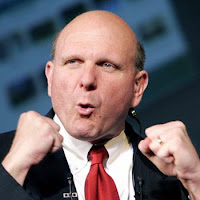
"It's all about the he said she said bullshit," once sang Limp Bizkit lead singer Fred Durst. No one knows for certain yet who's telling the truth, but there's a lot of money in Chinese internet companies (Baidu and RenRen both went public this year) and that was the main reason Einhorn was so bullish on Yahoo's stock. On Wednesday, Einhorn made it clear at the Ira Sohn Conference (where people pay money for charity in exchange for expert opinion's on which stocks are hot, the current economy, etc.) that it's time for Microsoft CEO Steve Ballmer to step down. He related it to a moment when he was playing football with his friends (at Cornell) thirty some years ago and he knew he needed to step down from being quarterback and give someone else a shot.


Really? he's using that example in comparison to what the CEO of one of the greatest tech companies in history should do? As of March 31st, Einhorn has 1.39 million shares of Microsoft stock, equivalent to $230.2 million in cash. How seriously are we to take Einhorn's opinion here? Only a week after his alleged lobbying for Yahoo! stock, Yahoo stocks surged southward after the Alibaba dispute made headlines. I think Ballmer's $8.5 billion acquisition of Skype was a very important one and could propel Microsoft to the top of an untapped market, video calling. They can implement Skype into other products that are already doing well for them, namely Xbox Kinect. The Windows Phone, which came out two years too late, is lagging far behind Android, Apple, and even Blackberry. This may push them into the conversation with those competitors.

And today, Einhorn announced he's trying to close a deal with the New York Mets. Einhorn will own roughly 49% of the team and it'll cost him close to $200 million. Talk about making headlines. Microsoft shares actually rose 2.3% after Einhorn's words. Has his Yahoo! misstep made investors skeptical? I believe so. It's too early to be calling for Ballmer's head. This is the first legitimate acquisition they've made the past 2-3 years and the best thing the company's done since their 1.5% stake in Facebook. Most importantly, they kept Skype away from its competitor, Google. The next six months should tell a lot about how Microsoft plans to integrate Skype into their products and whether it'll be successful to the extent that the Windows Phone becomes a hot commodity rather than an outlier.

From short selling to being a short stack on the poker felt, David Einhorn has been around the block more than once and when it comes to taking large risks, he's as good as it gets. His constant charity donations makes you question the "greed is good" quote that Michael Douglass once engrained in our heads. But so far this month, with both Yahoo and Microsoft, Einhorn has made his opinions heard loud and clear. If Yahoo's stake in Alibaba somehow gets back up to that 30-40% level AND Skype turns out to be the biggest bust in M&A history, then maybe Einhorn will look as smart as he is. But for now, he has a better chance on the Mets making the World Series than either Ballmer getting ousted or Jack Ma settling the dispute with Carol Bartz.


Wednesday, May 25, 2011

Russian Roulette or is Yandex the Real Deal?


"Lifestyles of the rich and famous, they're always complainin', always complainin."


Just three days after LinkedIn went public on the NYSE, "Russia's Google" or Yandex, went public on the Nasdaq in the most pricey internet offering since Google in 2004. What does that mean? Well the company raised $1.3 billion for the IPO and just like LinkedIn, it went from being valued at around $4-5 billion to $11 billion when all was said and done. Just a couple months ago we heard numerous reports about how private companies who were seeing success on the private market had no desire or were in no rush to go public, let's stop the bullshit. LinkedIn's IPO just opened the floodgates for a number of these so-called "satisfied being private" companies. Sarbanes-Oxley, cloud computing, blah blah blah. Going public is still the ultimate goal especially considering the interest in technology related companies.


But first, Yandex. Shares skyrocketed north of 55% on Tuesday, and the stock went from being priced at $25 at the beginning of the day to $38.84 by closing bell. Like LinkedIn, Yandex is profitable ($29 million last year) and has a net income of $134.3 million with a revenue of $439.7. Also like LinkedIn, Yandex isn't in its nascent stages or a company that just got VC funding last week. They've been around since 1997 under the leadership of CEO Arkady Volozh, a mathematician, and Ilya Segalovich, a geophysicist.


It's been awhile since the Russians had much to celebrate. They were the first to get to space, have had the best chess players, terrific writers, some talented hockey players and figure skaters, and now they've made their way into the new technology boom. Billionaire investor and entrepreneur Yuri Milner has been the center of attention the past couple years for his investments in Zynga and Facebook. His company DST Global (or Mail.Ru) now owns a 2% or $200 million stake in Facebook. He is one of the few people in Europe right now who gets IT and seemingly knows where to put his money-in Silicon Valley start-ups. Might come with being a Upenn graduate? Maybe. What I'm getting at here is that Russia/Eastern Europe is turning it around it terms of where they stand with innovation going forward. What venture capital giants Marc Andreeson and Ben Horowitz are to the US, Milner is to Russia. For every billionaire investor, we need brilliant entrepreneurs. Didn't Larry Page and Sergey Brin have physics backgrounds? Besides being older, these two Yandex guys have things in common with Google's bosses. It's a great thing for the country who's English speaking skills are clearly lacking, given Yandex's 60% market share in the country and its 270 million users. I also like this company because they've shown consistent revenue increases the past 3 years and they were established in '97, in the middle of the dot-com boom so they've been able to tweak their business model and technology to succeed now.


How do I know this "we don't need to go public" talk is overrated? Because Zynga just filed to IPO yesterday a year ahead of schedule. If LinkedIn and Yandex have had such succesful IPOs with a fraction of Zynga's $400 million profit in 2010, why shouldn't Zynga go public? It would be stupid not to given this "frothiness" in the market. Zynga, the maker of the Facebook game Farmville, Mafia Wars, and now Gagaville among many others, has been the social gaming leader for the past couple years. Facebook will not go away anytime soon, as a result, neither will Zynga. What will all the soccer moms do without Farmville? It's hard to imagine that world.

Look for Facebook and Groupon to be next in line for filing there IPOs sooner rather than later. Facebook is scheduled to go public April of 2012, but given the high interest in anything technology/internet related, they should get in NOW. Out of all the hot start-ups, Groupon is the one I have the least amount of faith in. Their business model, which mainly support small-businesses, can't be logical in the long-run for these companies, or can it? I think right now Groupon and LivingSocial are hot ideas to experiment with because the idea is new, it's something these restaurants have never tried-giving customers major discounts in hopes that they'll eat their food at a smaller price. Maybe it will continue to succeed 3-5 years down the road and I'll be proved wrong, but I don't think its sustainable for the sake of keeping these small businesses running or being profitable.